Kerman

South-eastern Iran · plateau and Lut margin

Kerman

Desert citadels and water-fed gardens

Image source · Wikimedia CommonsDiego Delso · CC BY-SA 4.0

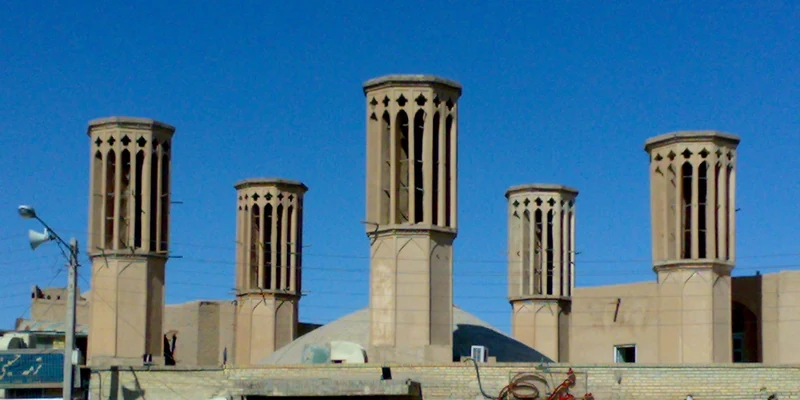
Kerman lies in south-eastern Iran, where adobe towns and desert landscapes meet varied geological formations. Old routes, oases and crafts such as pateh embroidery shaped a culture adapted to scarce water, with colour and fine workmanship central to its artistic traditions.

Historic bazaars bring that heritage into view at the scale of everyday life. Farther into the Lut Desert, the kaluts reveal a contrasting, much larger landscape.

Kerman at a Glance

Capital
Kerman
Region
South-eastern Iran · plateau and Lut margin
Best season
Spring & autumn
Suggested stay
3–4 days for Kerman and Mahan; 6–8 days for a provincial route
Best for
History · Architecture · Desert · Crafts · Food
Main access
Airport · Rail · Road

05

5 essential places

Image source · Wikimedia Commons

Shahzadeh Garden

Shahzadeh Garden at Mahan is a celebrated Qajar-period Persian garden. Terraces, a central water axis, pavilions and tree-lined paths use the natural slope to create an ordered green space within an arid landscape. It forms part of UNESCO’s Persian Garden World Heritage property.

Image source · Google Drive

Bam Citadel

The Citadel of Bam is Iran’s foremost example of a fortified historic town built in earthen architecture. Walls, towers, lanes, houses and the governor’s quarter rose above an oasis sustained by qanats; the citadel and its wider cultural landscape are inscribed on UNESCO’s World Heritage List.

Image source · Wikimedia Commons

Lut Desert

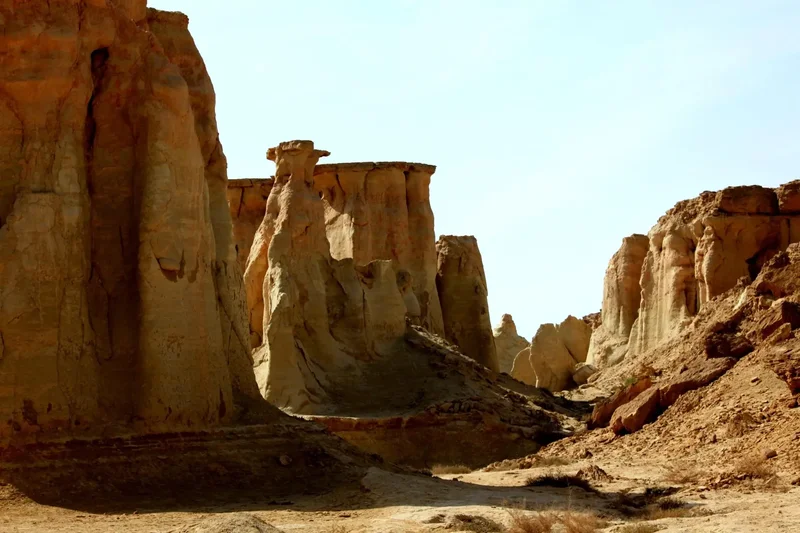
In the Lut Desert, powerful winds have sculpted sediment into vast ridges and corridors known as kaluts. Sunrise and sunset cast extraordinary shadows across this city-like landscape without buildings. Extreme heat and lack of water demand the right season, experienced local guidance and full preparation.

Image source · Wikimedia Commons

Ganjali Khan Complex

At the heart of Kerman, the Ganjali Khan Complex unites a Safavid square, bazaar, bathhouse, mosque, school, cistern and mint. Brick vaults, tilework and the richly decorated hammam reveal the structure of a historic urban centre that remains closely tied to the life of the bazaar.

Image source · Wikimedia CommonsNinara · CC BY 2.0

Meymand

Meymand is an ancient rock-cut settlement in a semi-arid mountain region. Dwellings are carved into soft rock, while a semi-nomadic way of life connects the village with surrounding seasonal pastures.

More about Kerman

Important Cities
  • Kerman — bazaar and Ganjali Khan Complex
  • Mahan — Shahzadeh Garden
  • Bam — citadel and cultural landscape
  • Shahr-e Babak — gateway to Meymand
  • Rafsanjan
Food & Souvenirs

Local food

  • Boz Qormeh
  • Halim Bademjan
  • Kolompeh sweets

Souvenirs & crafts

  • Pateh embroidery
  • Carpet weaving
  • Kilim weaving
  • Coppersmithing
Culture & Arts

Kerman’s bazaar connects commerce with handwork. Pateh embroidery on woollen cloth, carpet weaving and coppersmiths’ workshops form a recognisable artistic identity, best explored alongside the city’s historic market architecture.

UNESCO & Heritage

Selected UNESCO World Heritage properties

  • Bam and its Cultural Landscape — 2004
  • Shahzadeh Garden — component of The Persian Garden, 2011
  • Cultural Landscape of Maymand — 2015
  • Lut Desert — natural property spanning several provinces, 2016

Other historic places

The Ganjali Khan Complex and Rayen Citadel are other notable historic sights; neither is individually inscribed on the World Heritage List.

Selected Universities
  • Shahid Bahonar University of Kerman

Explore by interest

Explore next

Official & Further Resources