Old City of Yazd
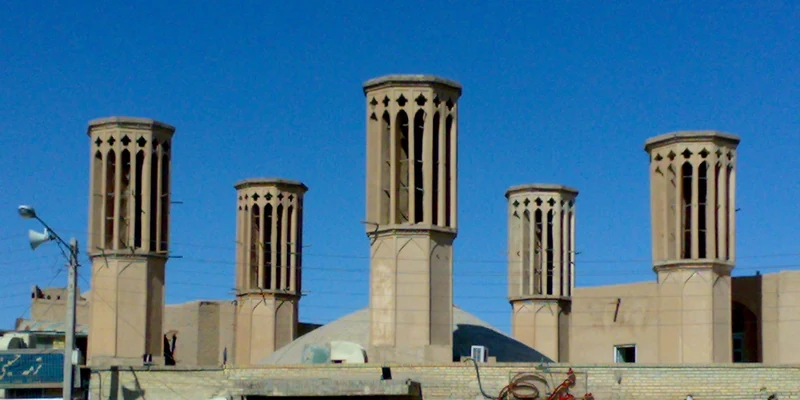
The Historic City of Yazd is an exceptional ensemble of earthen architecture, windcatchers, qanats and covered lanes. A UNESCO World Heritage property, it shows how urban life adapted to a desert climate.

Central Iran
An earthen city beneath the windcatchers
At the heart of Iran’s central plateau, Yazd is a brilliant expression of human adaptation to the desert. Windcatchers, qanats, earthen houses, gardens and Zoroastrian heritage formed a city and culture that manage water, shade and wind with precision. For travellers, Yazd offers desert stillness, sustainable architecture and the coexistence of ancient traditions.
Central Iran
05
The Historic City of Yazd is an exceptional ensemble of earthen architecture, windcatchers, qanats and covered lanes. A UNESCO World Heritage property, it shows how urban life adapted to a desert climate.
Yazd’s Amir Chakhmaq complex took shape in the Timurid period and brings together a square, mosque, bazaar and historic cisterns. Its tiered façade of repeated arches is one of the city’s defining views, especially when evening light reveals its symmetry.
With an axial watercourse, shade trees and Hasht Behesht pavilion, Dowlatabad is one of Iran’s loveliest desert gardens. Its tall windcatcher directs breezes inside for cooling; stained glass, water and geometry make the garden a component of UNESCO’s Persian Garden property.
In a tranquil garden, the Bahram Fire Temple safeguards a sacred flame believed in Zoroastrian tradition to have burned continuously for centuries. The present building, constructed in the 1930s with Achaemenid inspiration, is framed by the Faravahar emblem, an entrance pool and evergreen trees.
Kharanaq is a historic mud-brick settlement on the edge of the Yazd desert. A maze of lanes, multi-storey houses, a shaking minaret and a nearby caravanserai reveal architecture adapted to a village on caravan routes.