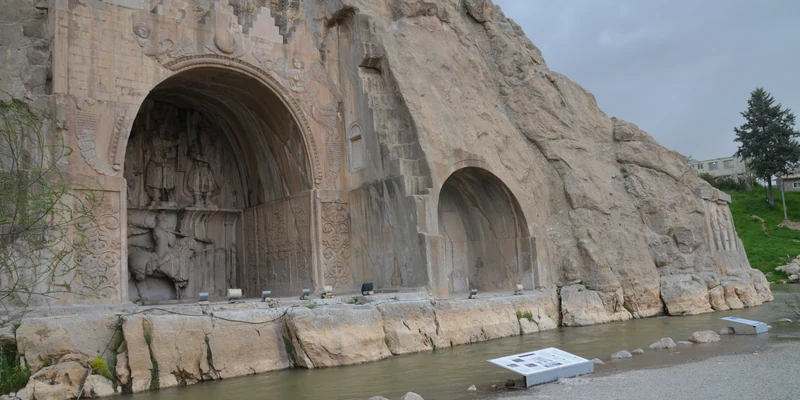
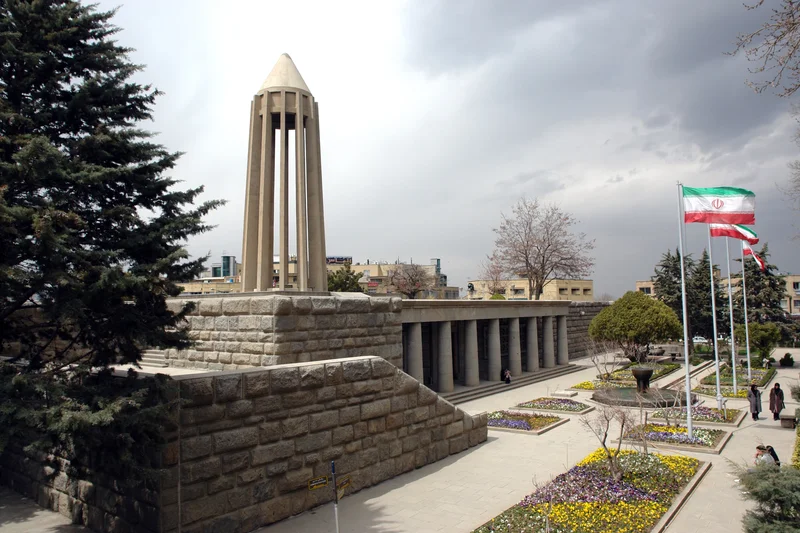
Avicenna Mausoleum
The Avicenna Mausoleum in Hamadan commemorates the eminent medieval physician and philosopher. Its columned monument contains a museum and library and stands as the city’s principal emblem of learning.

Western Iran · Zagros Mountains
An ancient capital beneath Mount Alvand
At the foot of Mount Alvand, Hamadan is one of the Iranian plateau’s oldest urban centres. Hegmataneh, royal inscriptions, the tombs of thinkers and water caves connect the age of the Medes with modern culture in a mountain landscape. Hamadan invites an encounter with the roots of Iranian city life, poetry, scholarship and cool highland nature.
Western Iran · Zagros Mountains
05
The Avicenna Mausoleum in Hamadan commemorates the eminent medieval physician and philosopher. Its columned monument contains a museum and library and stands as the city’s principal emblem of learning.
Hegmataneh, capital of the Medes and the Ecbatana of classical sources, was continuously inhabited for nearly three millennia. Urban and architectural remains from Median, Achaemenid, Parthian and Sasanian eras reveal its long role as a seat of power and summer capital. The site joined UNESCO’s World Heritage List in 2024.
On the slopes of Alvand, twin Achaemenid inscriptions of Darius and Xerxes are carved in Old Persian, Elamite and Babylonian. Beside an ancient route and a mountain waterfall, the texts bring royal power, communication and nature together within a single historical setting.
Ali Sadr is one of the world’s extensive navigable water caves, explored by boat and on foot through limestone lakes and passages. High ceilings, clear water and reflections of stalactites create a silent, spectacular world within the mountain.
On a hill in northern Hamadan, the Mausoleum of Baba Taher honours a poet of spare and profound Persian quatrains. The modern geometric monument, tiles bearing his verses and the open setting offer a quiet introduction to the emotional, popular voice of Iranian poetry.