Taq-e Bostan
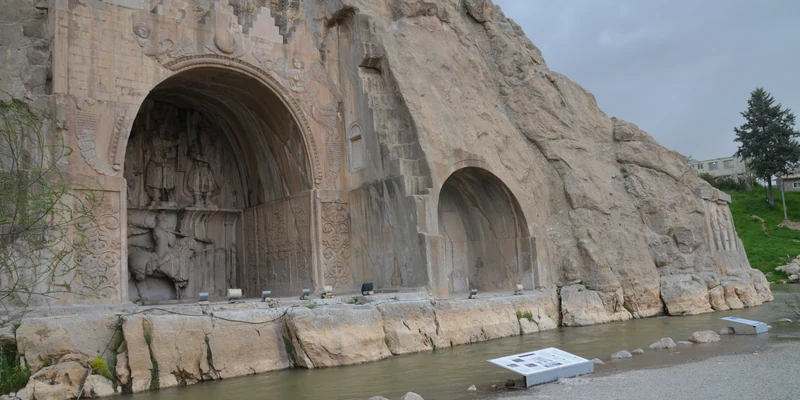
Taq-e Bostan preserves Sasanian rock-cut arches and reliefs. Its royal investiture and hunting scenes are major records of court art in late-antique Iran.

Western Iran · Zagros Mountains
Royal histories carved into rock
On the slopes of the Zagros in western Iran, Kermanshah has long been a passage between the Iranian plateau and Mesopotamia. Royal inscriptions, Sasanian rock reliefs, Kurdish towns, local cuisine and music reveal a richly layered culture. For travellers seeking ancient history within a mountain landscape, Kermanshah is a powerful and memorable destination.
Western Iran · Zagros Mountains
05
Taq-e Bostan preserves Sasanian rock-cut arches and reliefs. Its royal investiture and hunting scenes are major records of court art in late-antique Iran.
Bisotun is renowned for the trilingual inscription and relief of Darius I. This UNESCO World Heritage site is fundamental to the study of Achaemenid history and ancient languages.
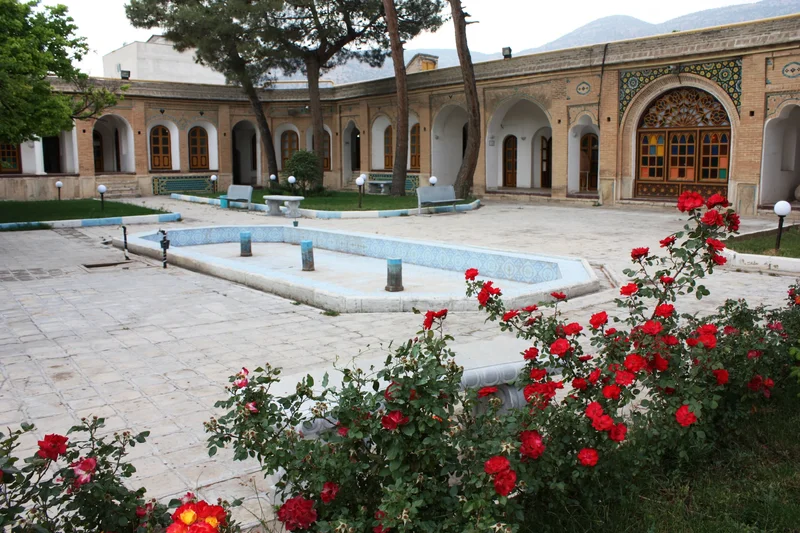
Tekyeh Moaven al-Molk is one of Kermanshah’s finest Qajar ceremonial buildings. Relief and seven-colour tiles place religious narratives beside Persian kings and imagery inspired by Persepolis. Its three sections—Hosseiniyeh, Abbasieh and Zeinabieh—also house museums of ethnography, dress and jewellery.
At the foot of Mount Shahu, Quri Qala is a water cave of broad limestone chambers and passages deep within the Zagros. A consistently cool temperature, stalactites and stalagmites, and halls known by local names make the visit a distinctive encounter with western Iran’s underground landscape.
Piran Waterfall descends in several stages from the high cliffs of the Rijab mountains. Orchards below and the vertical Zagros walls emphasise the long drop of the water.