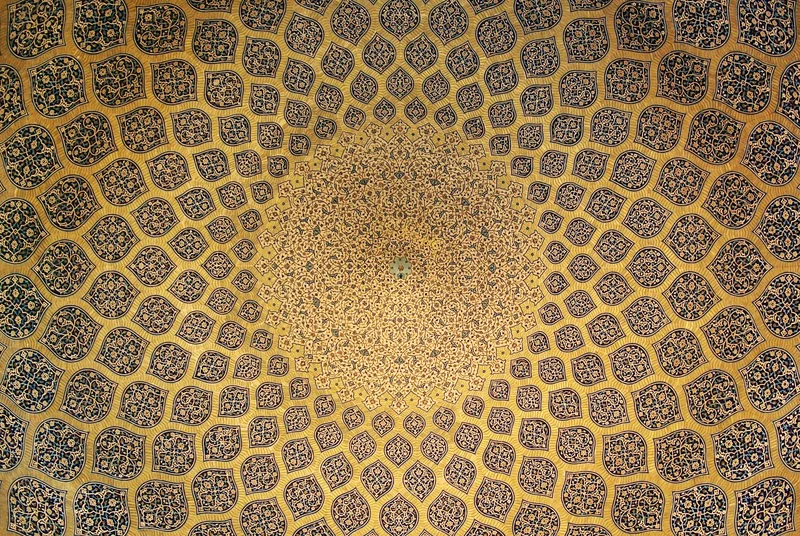
Fatima Masumeh Shrine
Qom’s centre is felt through the movement of pilgrims as much as its golden dome. At Fatima Masumeh’s shrine, turquoise tiles, calligraphy and successive courtyards make architecture part of an ongoing religious life.


Central Iranian Plateau, south of Tehran
A pilgrimage city at the desert’s edge
Begin Qom with the connection between pilgrimage and the life around it. Fatima Masumeh’s shrine and Jamkaran show different scales of sacred architecture; the bazaar, carpets and sohan workshops bring daily work into the same city portrait.
Beyond the city, choose between Hoz-e Soltan’s salt landscape and Kahak’s hillside gardens and springs. Deyr-e Gachin adds the architecture of historic journeys, while the house associated with Mulla Sadra gives philosophical history a domestic scale.
05
Qom’s centre is felt through the movement of pilgrims as much as its golden dome. At Fatima Masumeh’s shrine, turquoise tiles, calligraphy and successive courtyards make architecture part of an ongoing religious life.
Space for gathering defines Jamkaran: broad courts, blue domes and minarets southeast of Qom. Tuesday evenings are particularly active, and after-dark illumination gives the pilgrimage complex a different presence against the open sky.
Look upward as well as along the shops in Qom Bazaar. Geometric skylights and brick domes frame silk carpets, spices and sweets, while courtyard spaces reveal how trade sits within the pilgrimage city’s everyday rhythm.
Hoz-e Soltan is a landscape written by rainfall. Shallow water can turn the salt surface into a sky mirror, while drier conditions reveal another expanse; safe routes and informed local guidance matter around its marshy ground.
Gardens and water channels change the mood south of Qom in Kahak. Its cooler mountain setting, mud-brick quarters and house associated with Mulla Sadra bring philosophical history into a small-town landscape rather than a monumental complex.
Pilgrimage and religious education shape Qom’s cultural life. Mulla Sadra’s house in Kahak offers another perspective: a philosopher’s residence set among gardens and hills, beyond the shrine city.
Other heritage stops include the Fatima Masumeh Shrine, Jamkaran Mosque and Mulla Sadra House; these are not individually inscribed World Heritage properties.