 01
01Naraq
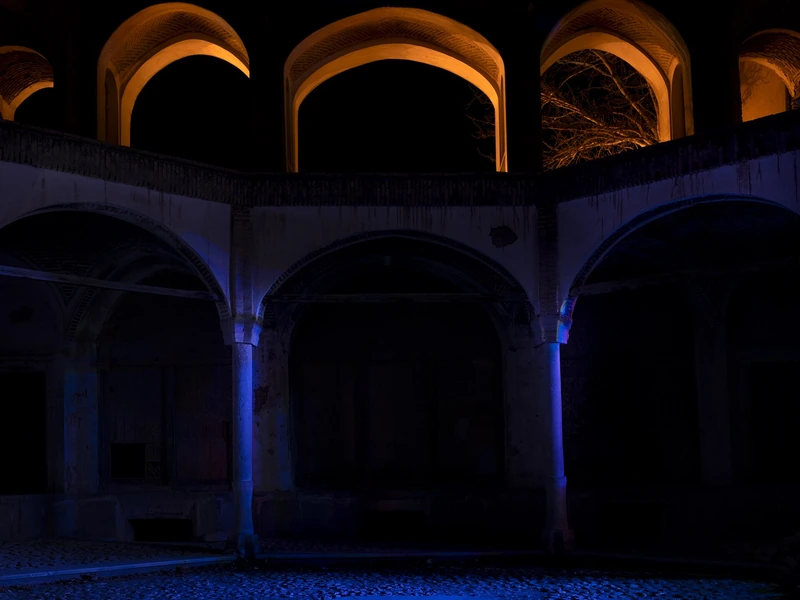
Mud-brick lanes lead into Naraq’s covered bazaar and courtyard houses. This small Markazi town makes the logic of a dry-climate settlement visible, with Qajar domestic architecture best noticed at the scale of a slow walk.


Central Iranian Plateau
Stone villages, ancient columns and salt wetlands
Arak’s Qajar bazaar and Four Seasons Bath introduce Markazi through urban spaces, while Saruq’s carpet traditions add the work of local makers. Elsewhere on the central plateau, archaeological remains and farming settlements share the landscape with industrial towns; Khorheh’s columns offer a very different kind of stop.
A route beyond Arak can follow water and cultivation: Mahallat’s springs and flower-growing greenhouses, Saveh’s pomegranate orchards and the shifting margins of Meyghan Wetland. Plains and foothills connect these places, letting a provincial journey move between built heritage, productive land and seasonal nature.
05
01Mud-brick lanes lead into Naraq’s covered bazaar and courtyard houses. This small Markazi town makes the logic of a dry-climate settlement visible, with Qajar domestic architecture best noticed at the scale of a slow walk.
 02
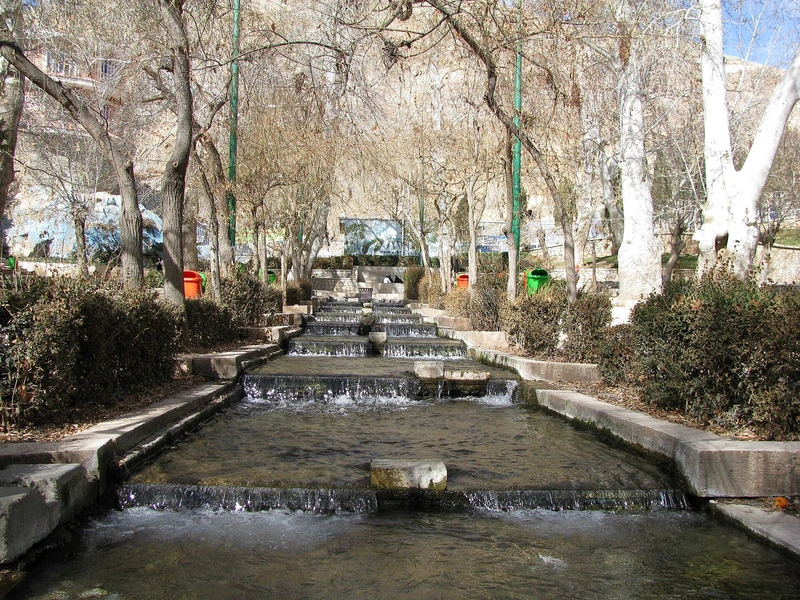
02Flowers turn Mahallat’s cultivated ground into part of the attraction. Springs, greenhouses and commercial growing fields sit alongside thermal waters, revealing a landscape shaped as much by gardeners and growers as by natural water sources.
 03
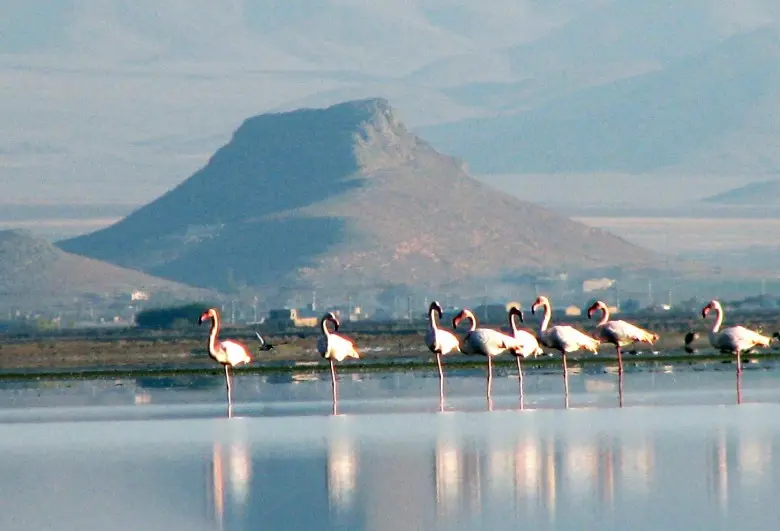
03Water and salt redraw Meyghan’s margins near Arak through the seasons. This saline wetland combines salt flats with hardy vegetation; in winter, migratory cranes and other birds may bring movement to the open landscape.
 04
04Two slender columns stand between the valley and mountains at Khorheh. Their Ionic capitals are the clearest surviving features of an ancient building whose rooms, corridors and finds preserve several periods of occupation.
 05
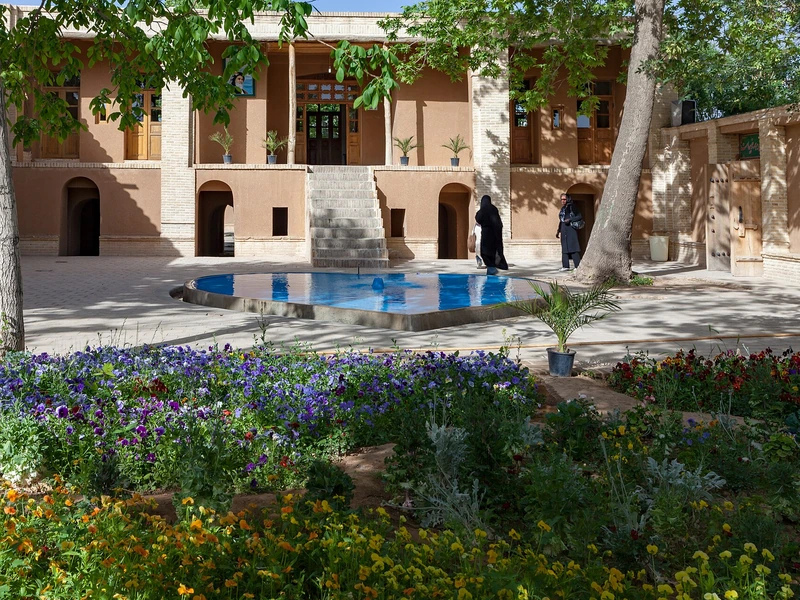
05Courtyards, pools and defensive towers shape Khomein’s Qajar family compound. Known as Imam Khomeini’s birthplace, the house also gives a close view of residential spaces arranged within a substantial historic household.
Arak’s bazaar links commerce with carpet making. In Nimvar, the spring Bilgardani ritual accompanies irrigation-channel clearing and the agricultural season, offering a specific glimpse of the province’s rural culture.
Other heritage stops include Arak Bazaar, the Four Seasons Bath and Khorheh; these are not individually inscribed World Heritage properties.