Avicenna Mausoleum
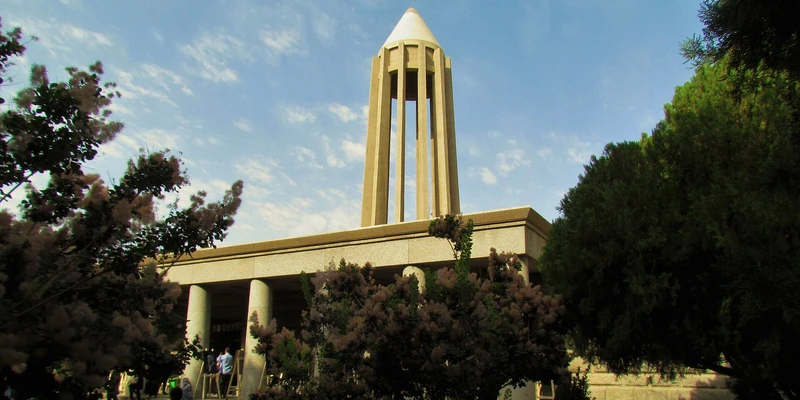
Avicenna’s memory gives Hamadan a monument to learning. The columned mausoleum brings a museum and library into the same setting, connecting the medieval physician and philosopher with the city’s enduring public identity.

Western Iran · Alvand foothills
An ancient capital beneath Mount Alvand
Alvand gives Hamadan’s urban history a mountain backdrop. Begin with the layers of Hegmataneh, then let Ganjnameh and the memorials to Avicenna and Baba Taher shift the emphasis from royal authority to learning and poetry. Hegmataneh’s UNESCO status gives context to the city’s long significance.
Beyond Hamadan, Ali Sadr’s water cave and Lalejin’s pottery workshops introduce contrasting encounters with nature and skilled making. Malayer and Tuyserkan extend the route through orchards, dried fruit and woodworking traditions. Together these stops turn a city visit into a wider exploration of the province’s landscapes and local work.
05
Avicenna’s memory gives Hamadan a monument to learning. The columned mausoleum brings a museum and library into the same setting, connecting the medieval physician and philosopher with the city’s enduring public identity.
Nearly three millennia of urban life lie behind Hegmataneh’s surviving remains. The Median capital, later a seat of power and summer capital, invites you to read Hamadan through successive ancient eras and its 2024 UNESCO inscription.
Royal words meet a mountain waterfall at Ganjnameh. Darius and Xerxes left twin inscriptions in three languages on Alvand’s slopes, giving an ancient route a tangible connection with Achaemenid authority and communication.
Water turns Ali Sadr’s limestone passages into a journey by boat and on foot. High ceilings and stalactite reflections shift attention between the cave above and the lakes below, revealing an interior landscape within the mountain.
Baba Taher’s spare quatrains give this Hamadan memorial its voice. A modern geometric monument on a northern hill pairs verse-bearing tiles with an open setting, making poetry the natural focus of a quiet stop.
Lalejin pottery and Malayer woodcarving offer two clear routes into the province’s arts. Kilim weaving and leatherwork also connect urban workshops with skills passed through local communities.
Other historic sights include Ganjnameh and the tombs of Avicenna and Baba Taher.